
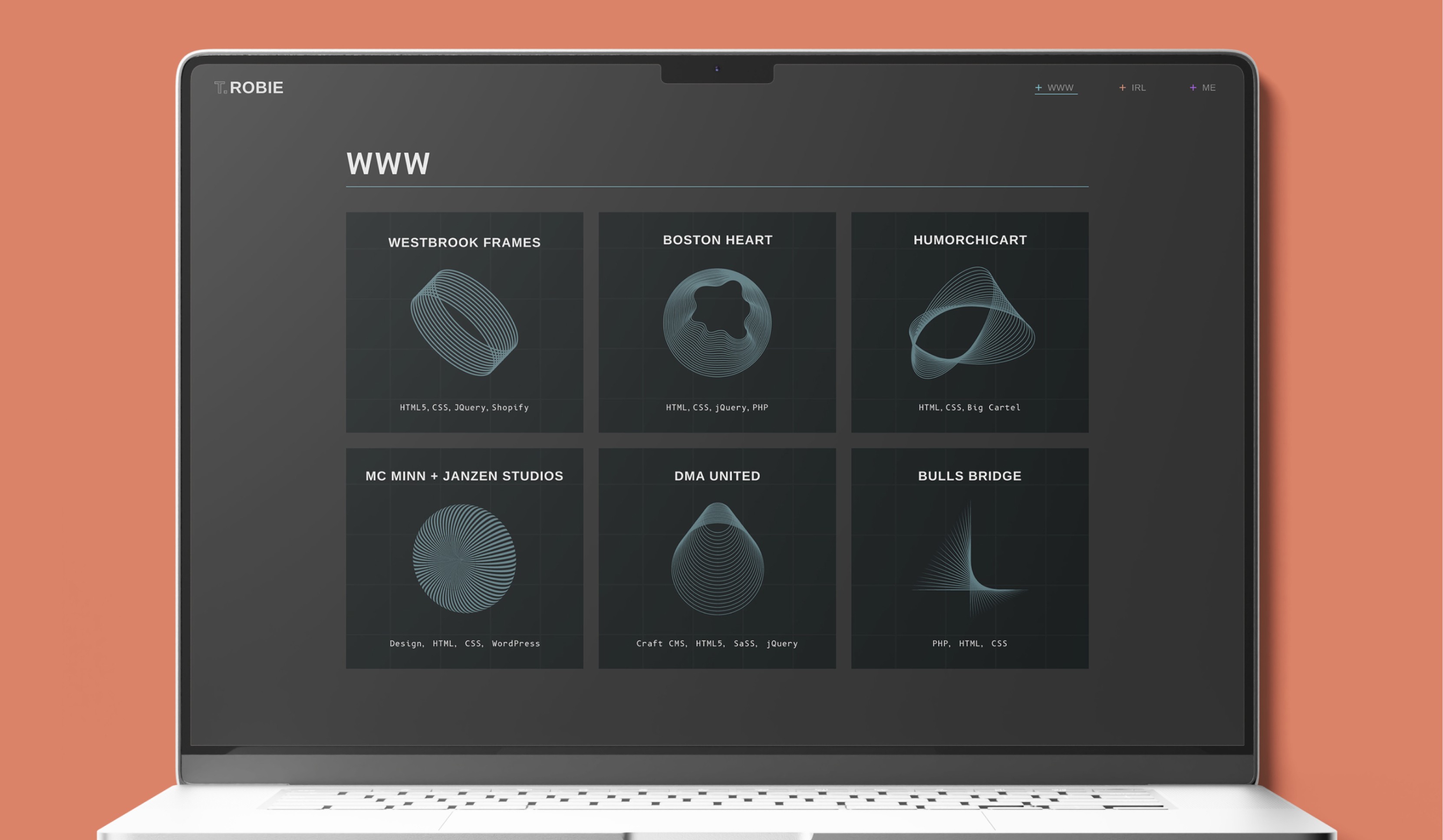
Collaboration with Travis Robie to design his personal portfolio, focusing on clarity, balance, and effective presentation of his work.
Background
Travis wanted a portfolio website that reflected his dual identity as a web developer and graphic artist. His vision was a sleek, minimalistic design with a dark, technological aesthetic — clean lines, no personal photos, and a clear visual separation between his two branches.
PROCESS
Travis’ ideas were in the very first stage and we had to make our own interpretation of his concept. We were two designers working in parallel, and through several rounds of feedback and revision, we refined and aligned our approaches to match Travis’ ideas and personality.
OUTCOME
The final portfolio combined the best of both design directions, blending structure and creativity into a unified dark-themed interface that clearly differentiates his developer and artist sides while maintaining a cohesive, professional look.
01
Research
exploration
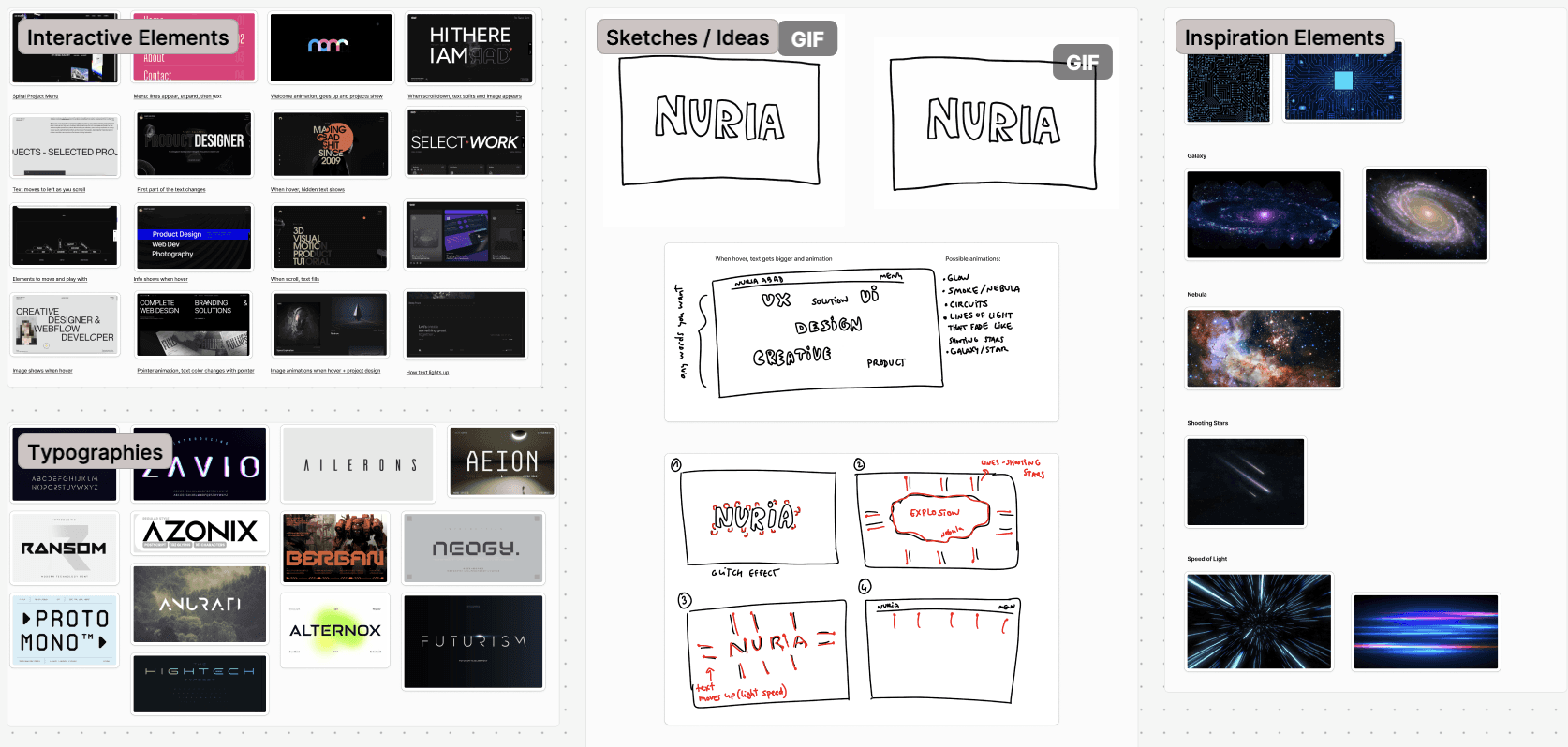
The project began with an exploration of developer and designer portfolios to gather inspiration and identify effective ways to present dual disciplines. The goal was to find a balance between showcasing Travis’s technical expertise as a developer and his creative expression as a graphic artist. A moodboard was created to define the visual direction, focusing on dark minimalist aesthetics, fine lines, and a modern, tech-inspired look.
02
Design
Two designers worked in parallel, each creating distinct visual directions. Initial sketches and layouts were reviewed with Travis, leading to valuable feedback on structure, tone, and balance. After each meeting, revisions refined the hierarchy, consistency and transition between screens.
FIRST VERSION
The first version used floating elements and hover-triggered color reveals, adding motion and interactivity to the layout.
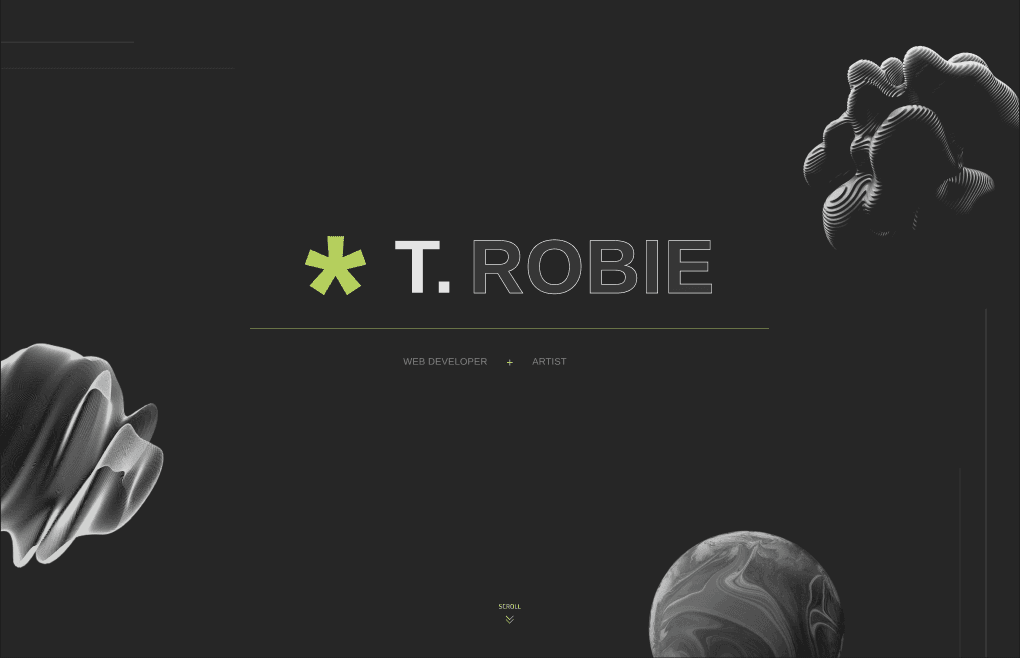
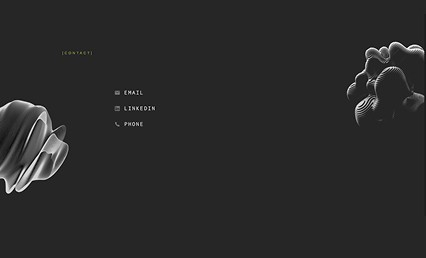
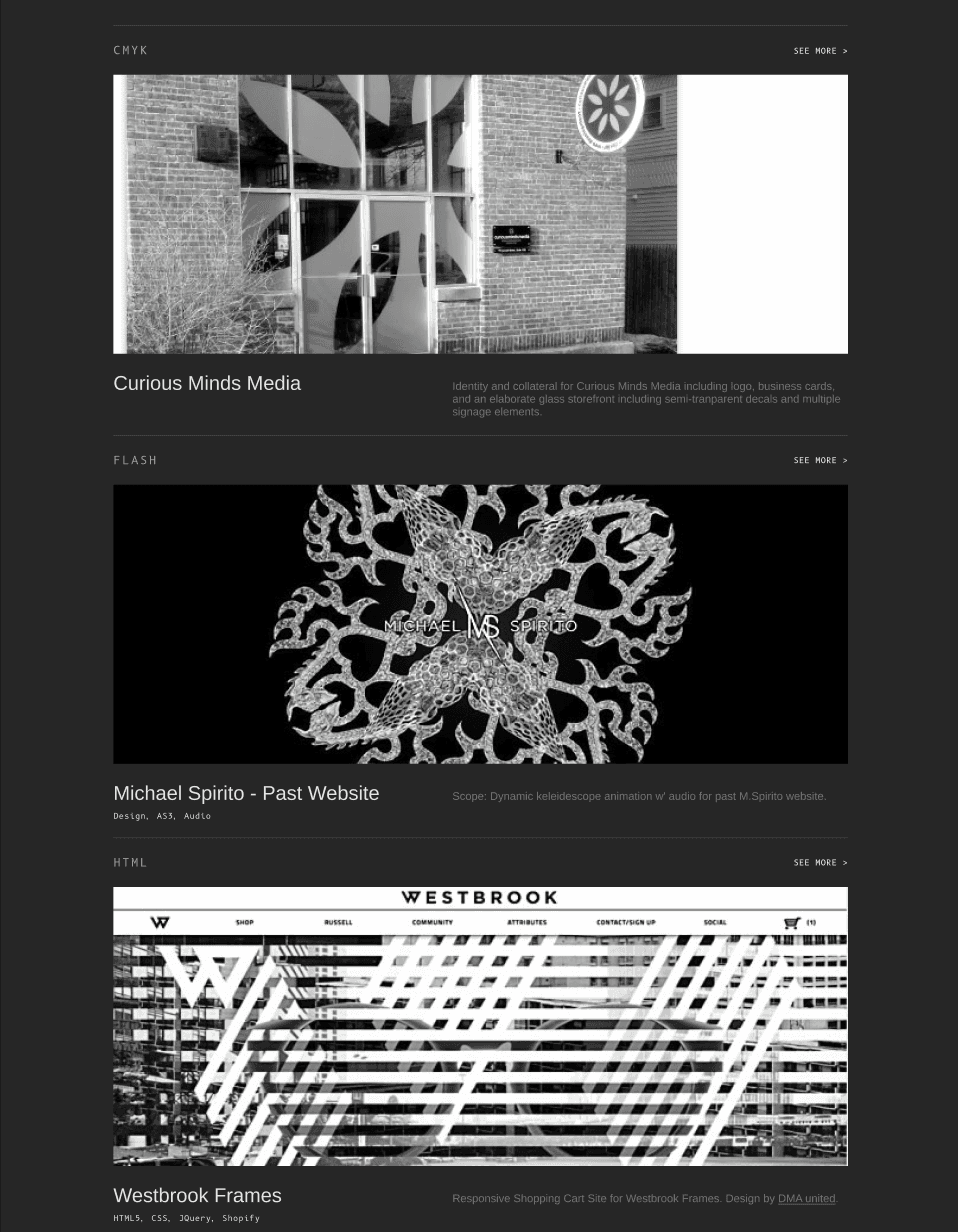
After the first review, Travis requested a clearer distinction between his development and graphic design work and encouraged further exploration of visual directions.
second VERSION
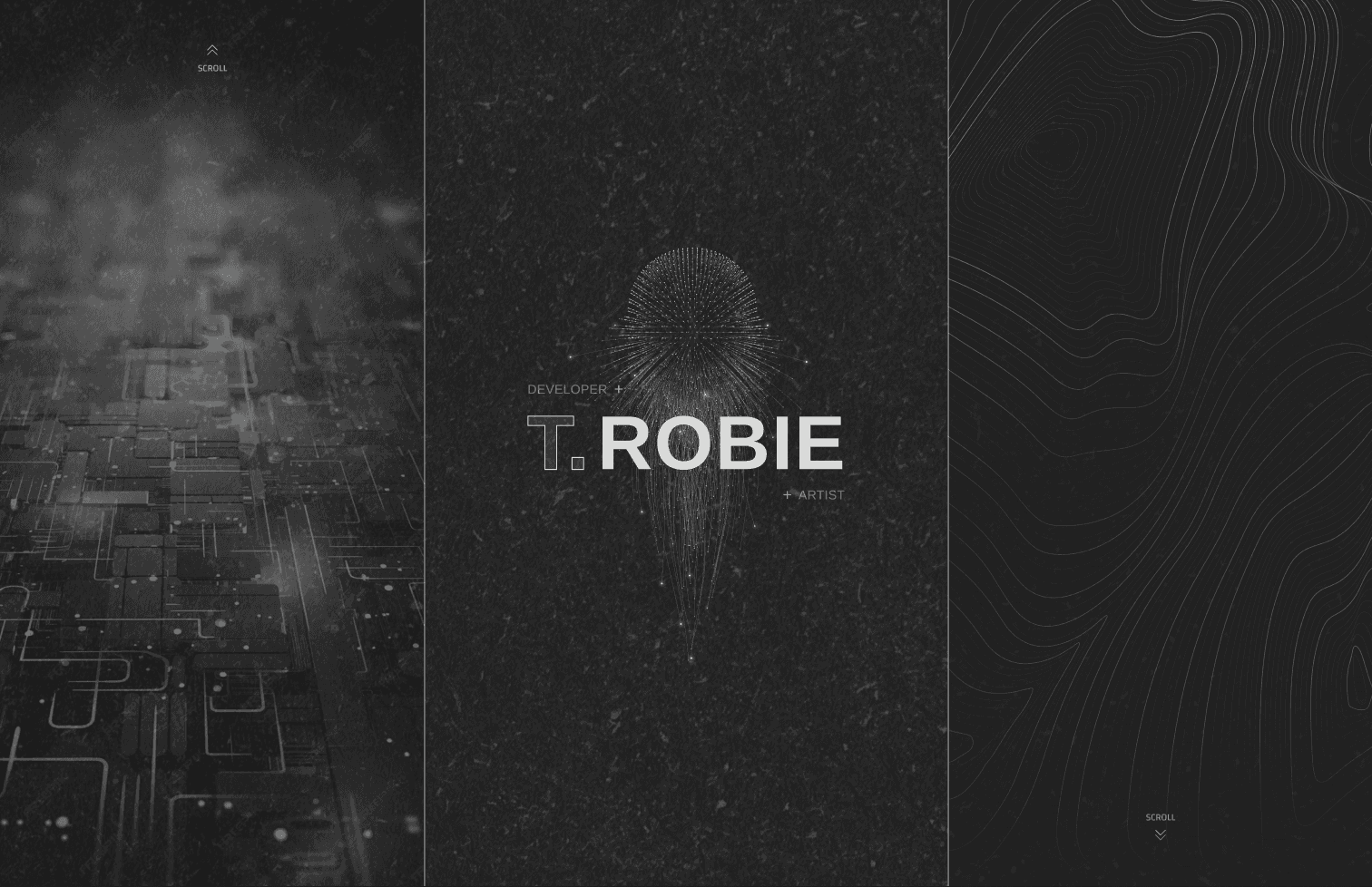
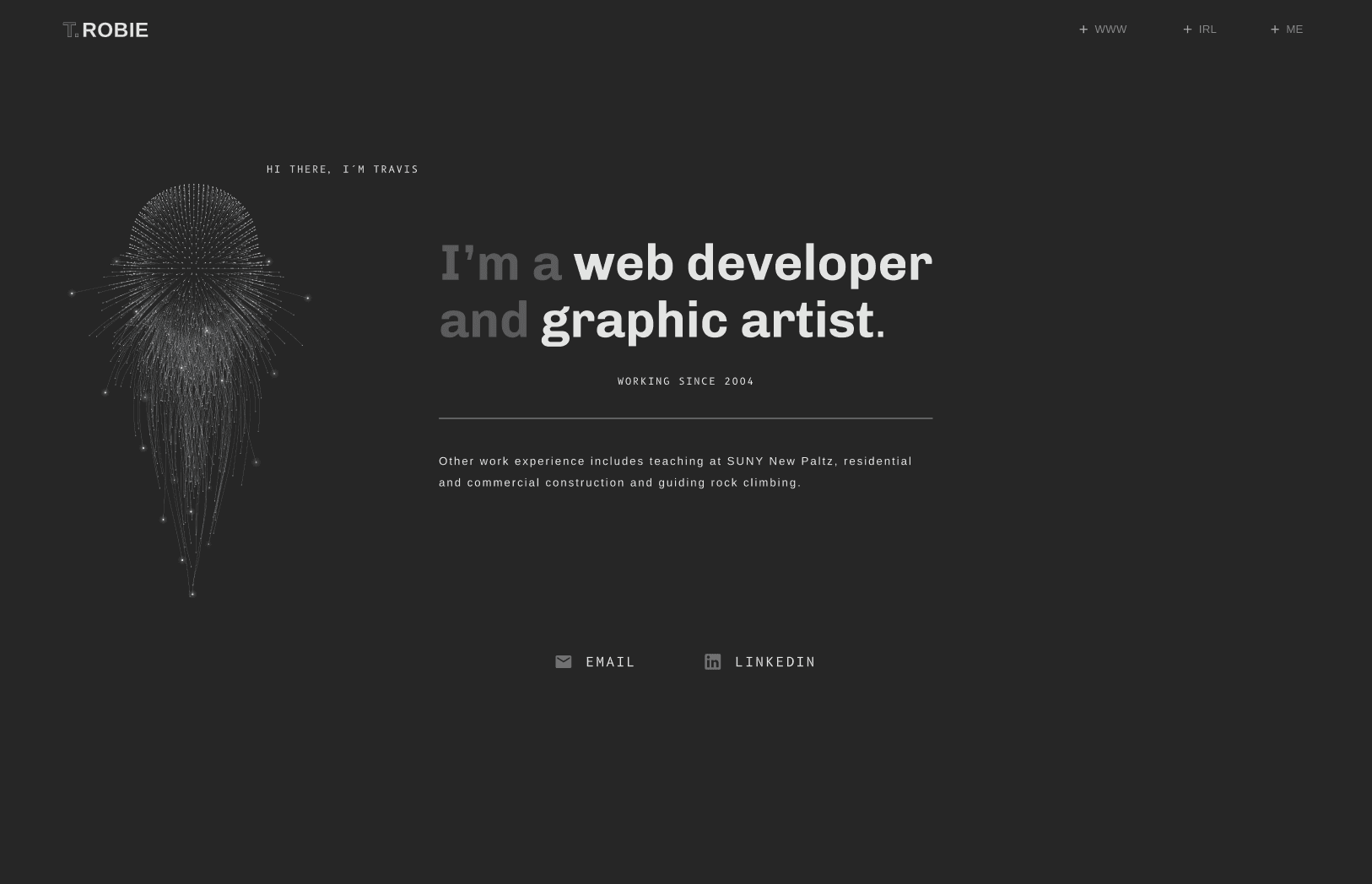
The second design exploration integrated these updates, aligning the concept more closely with Travis’s vision. Since Travis preferred not to include personal images, a graphic element was used to serve as a subtle representation of his presence throughout the design.
PROJECT CARDS EXPLORATION
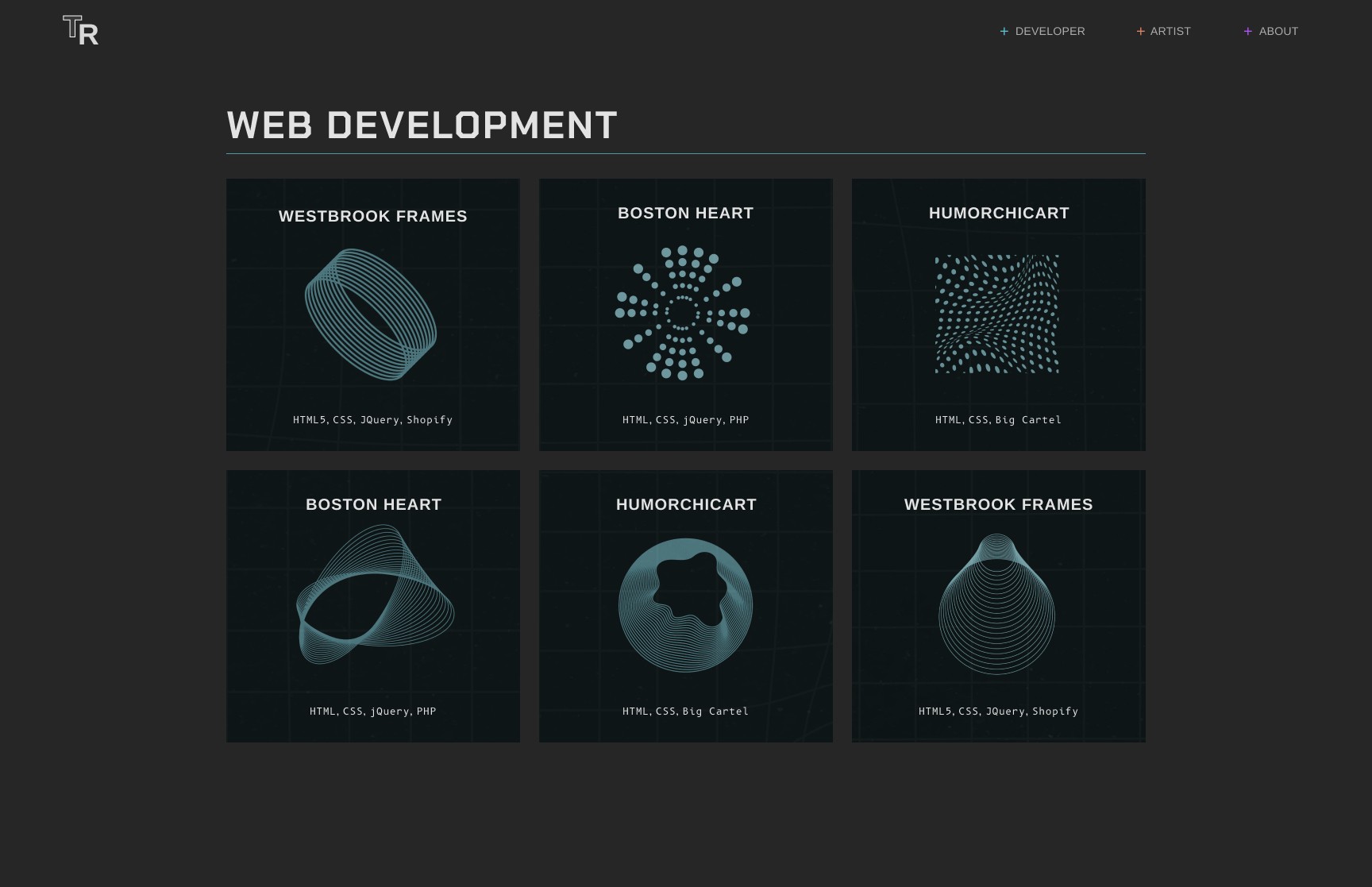
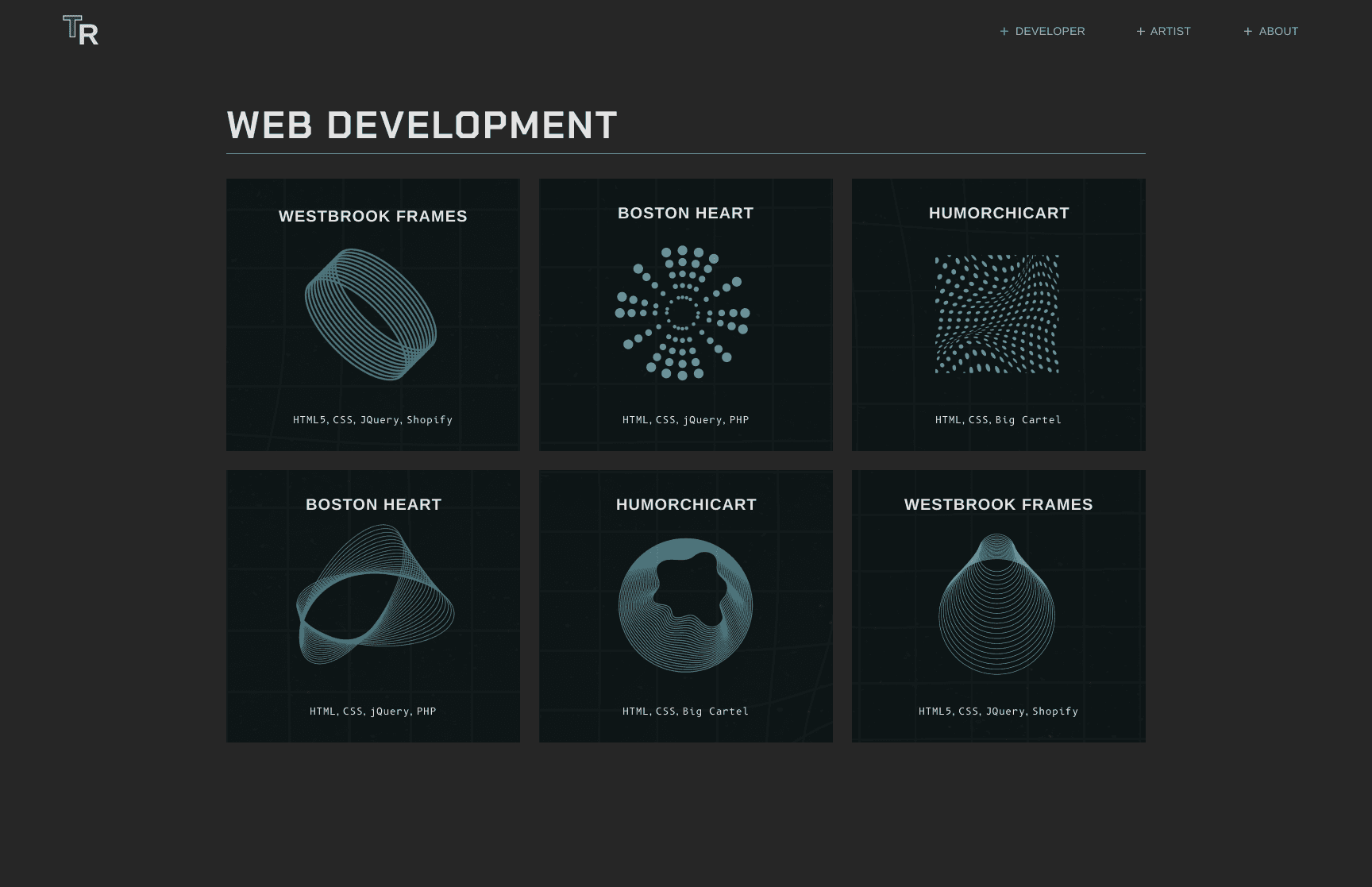
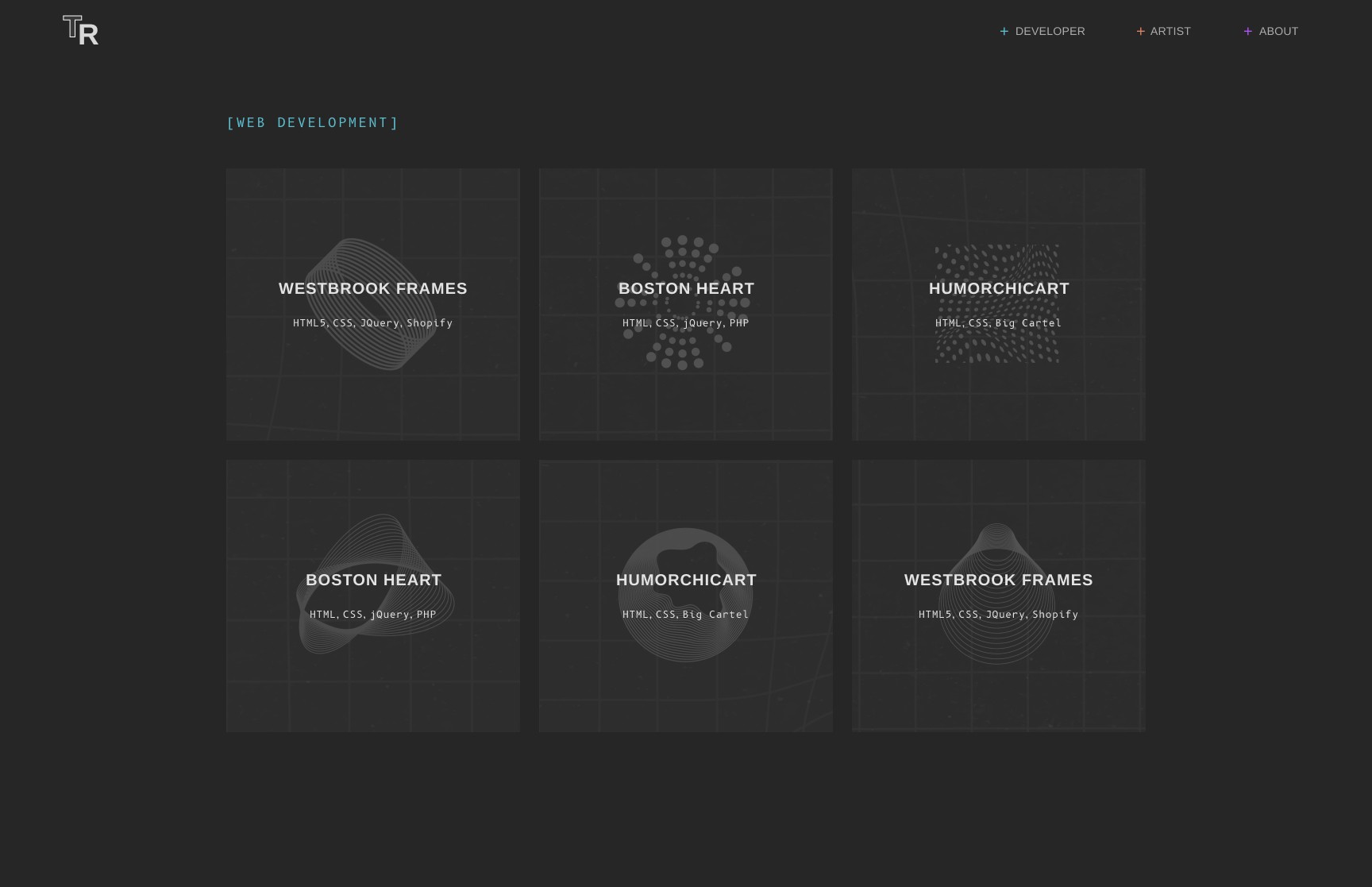
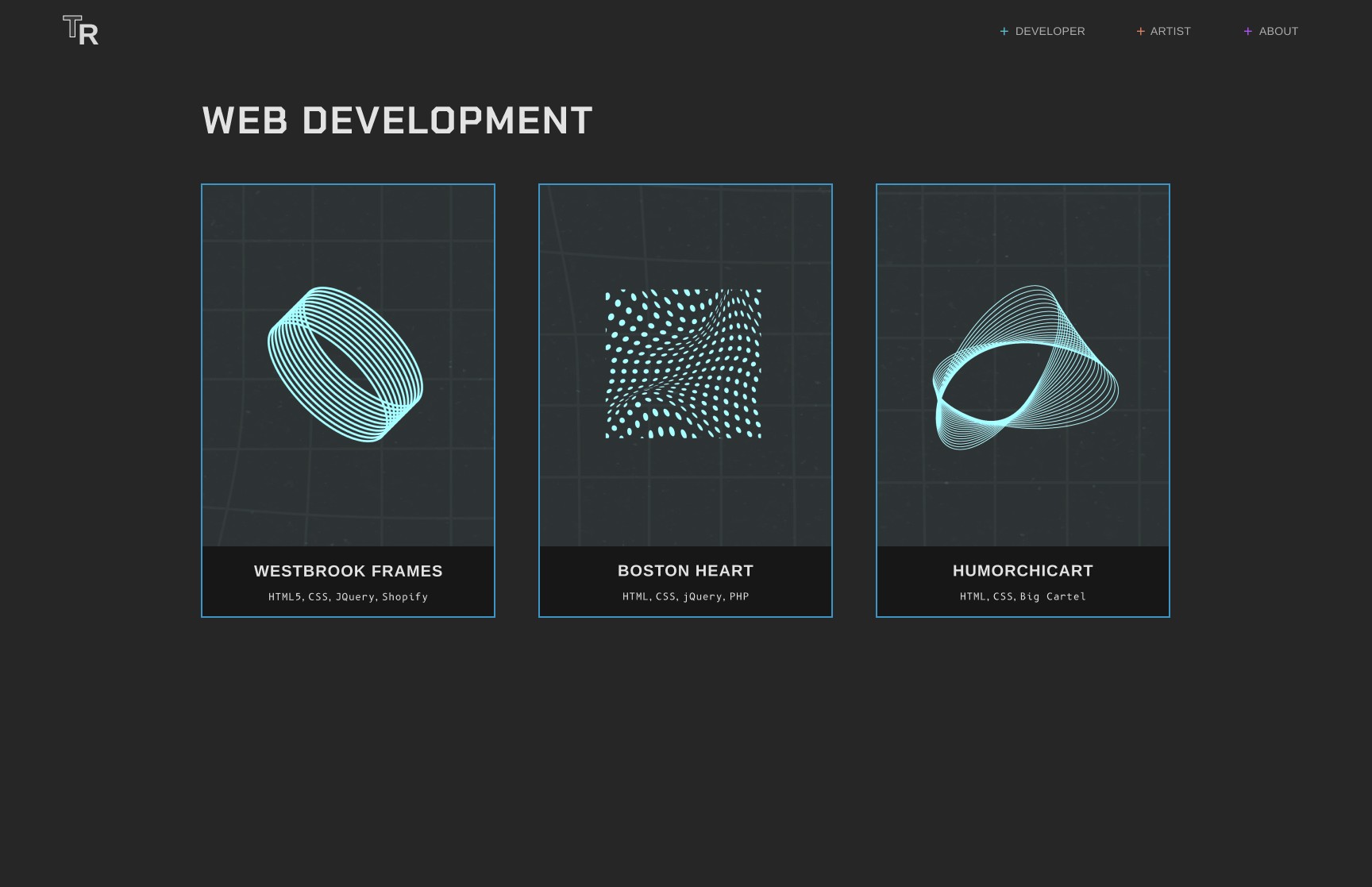
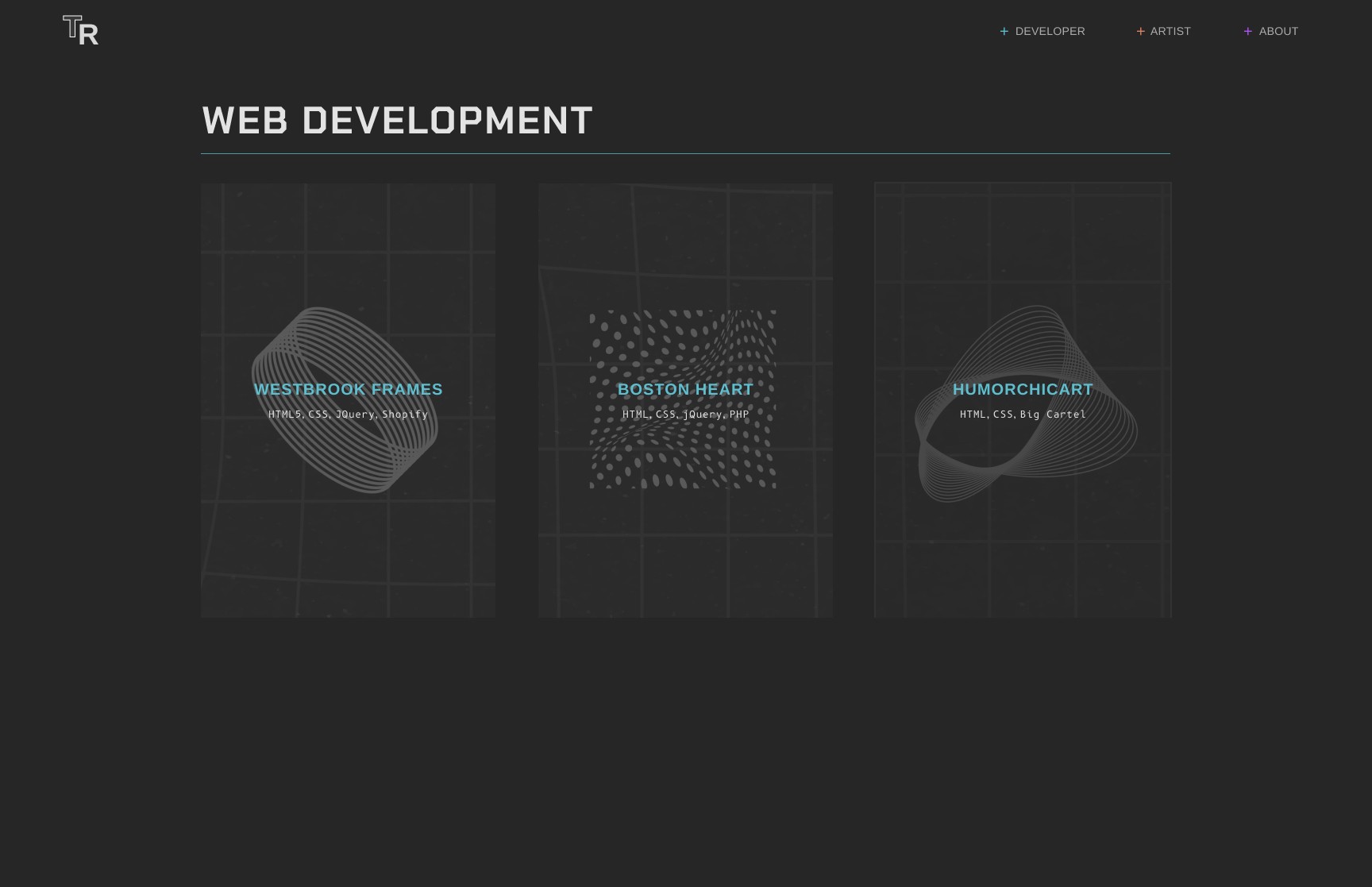
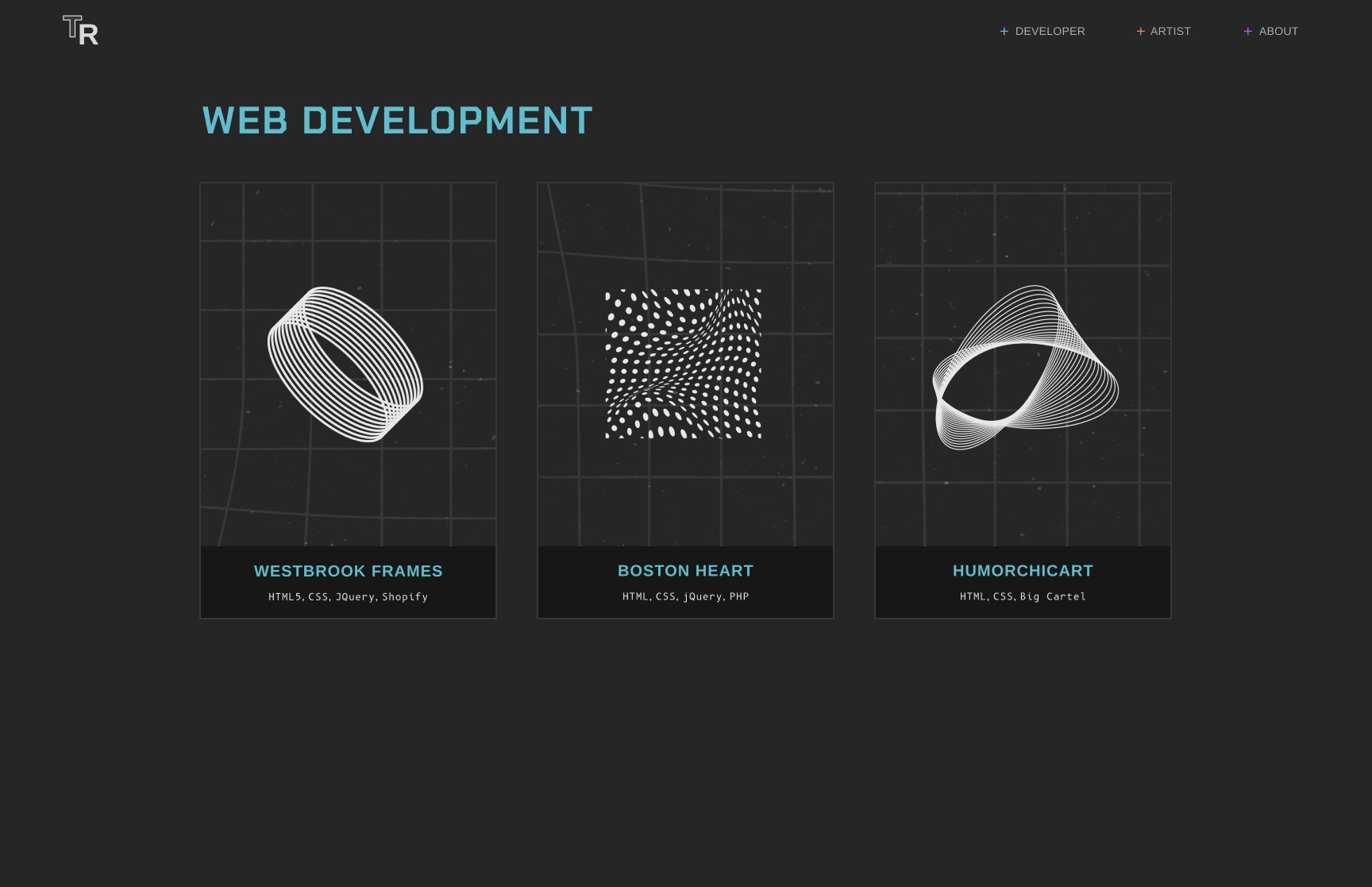
After the second review, Travis requested that the screen be split into two sections instead of three, leading to a subsequent iteration to implement this layout change.
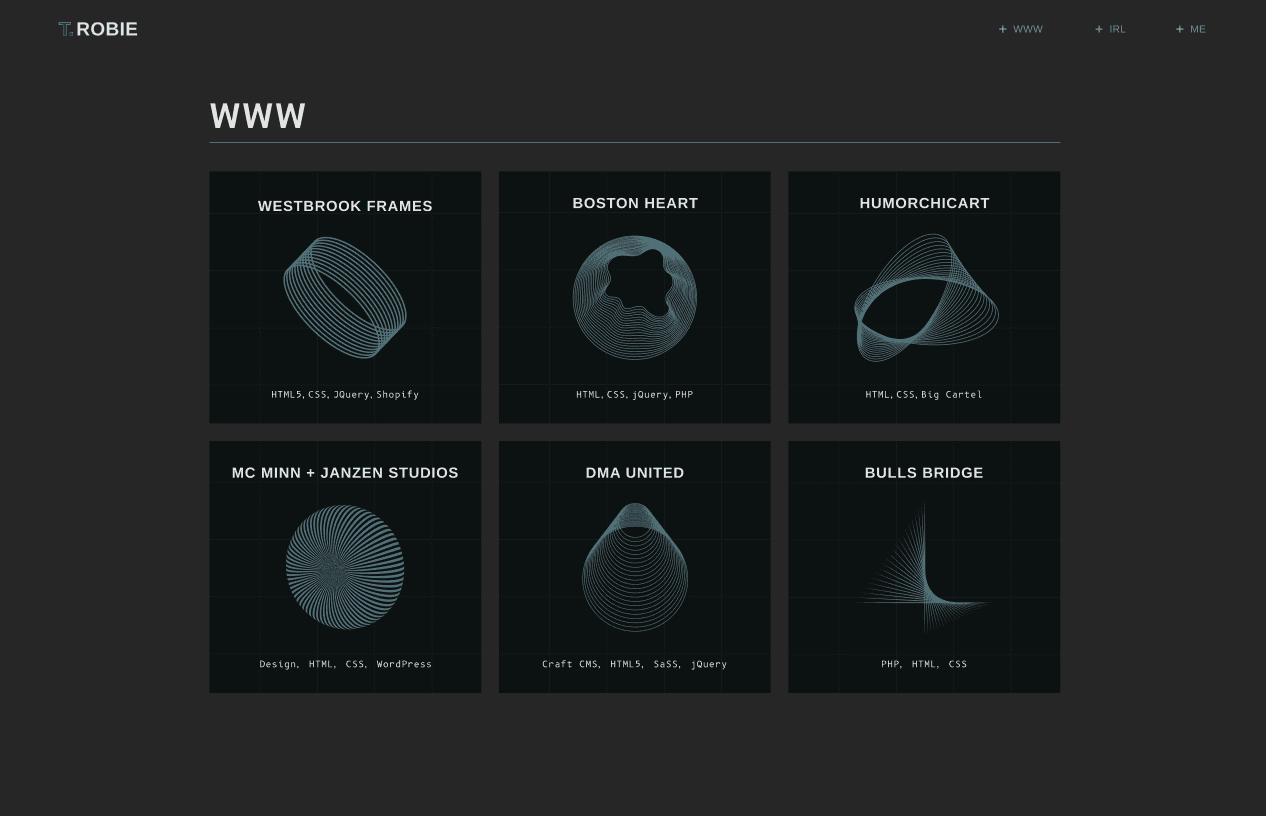
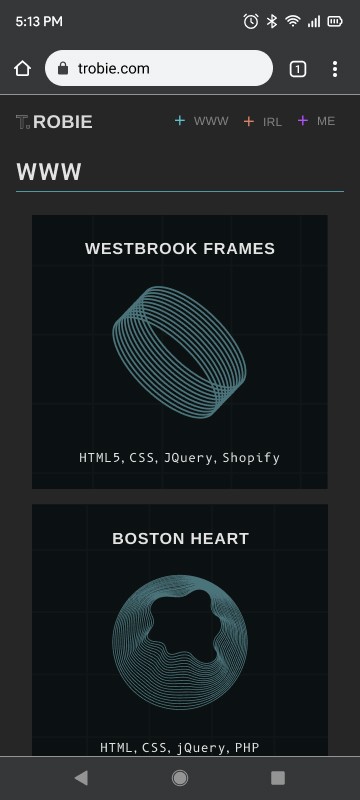
He also expressed interest in one of the card sets, which informed the design direction for the projects section moving forward.
FINAL PROPOSAL
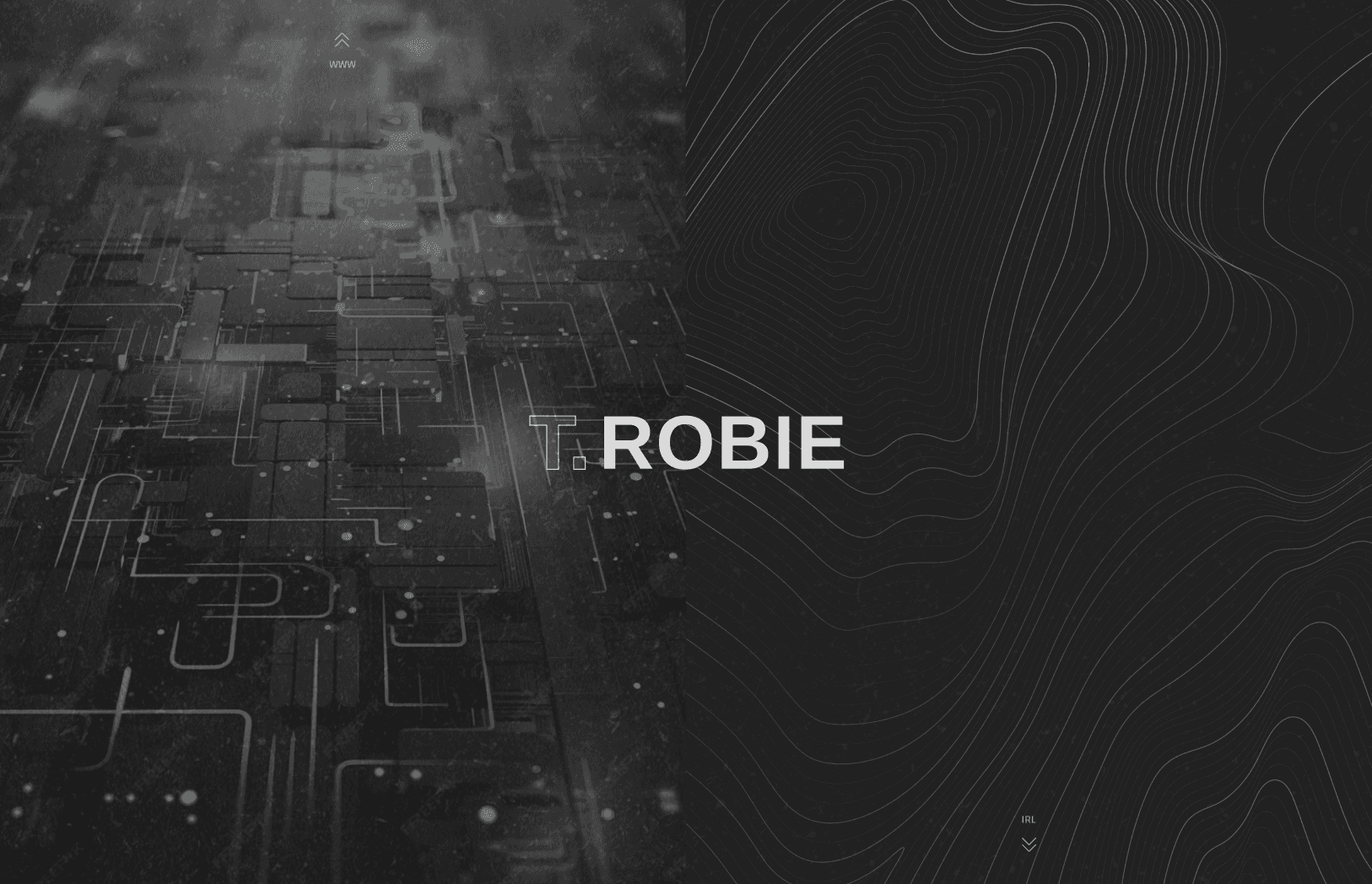
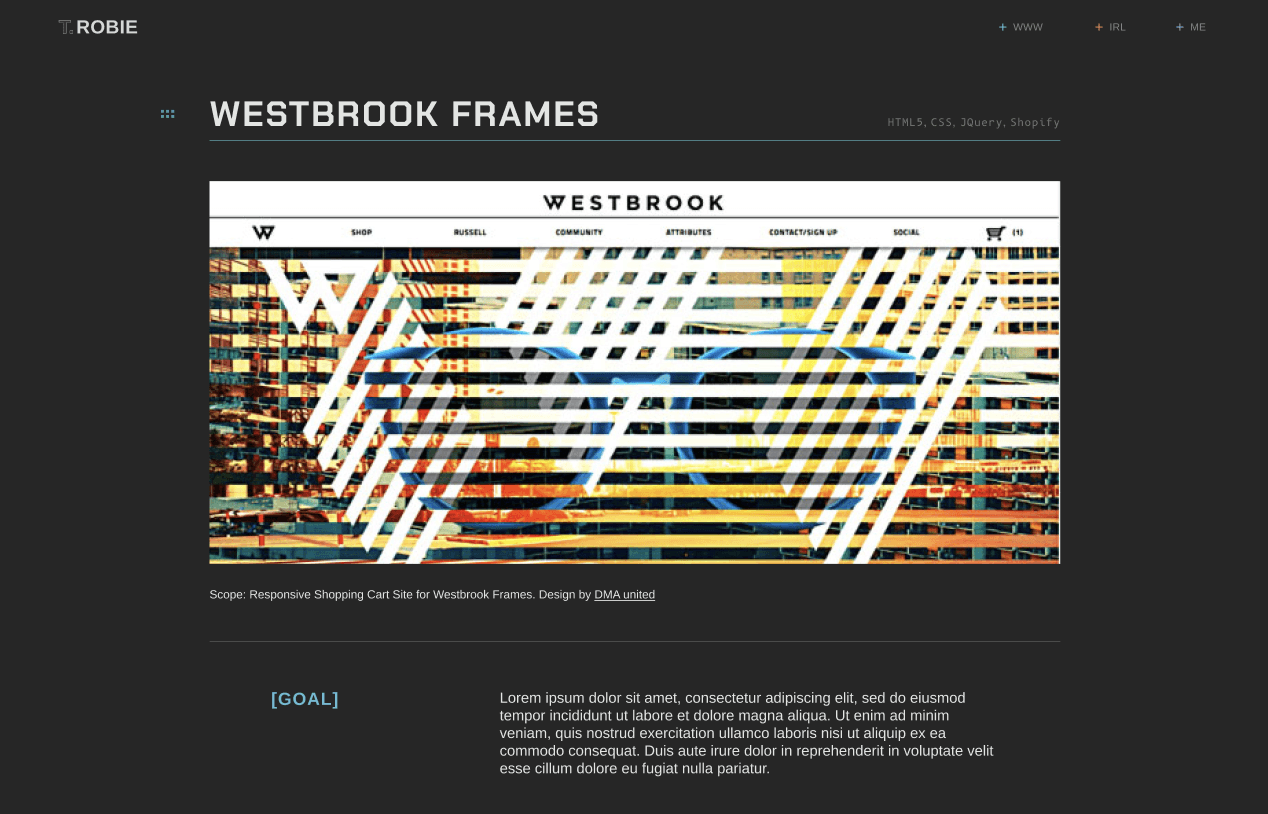
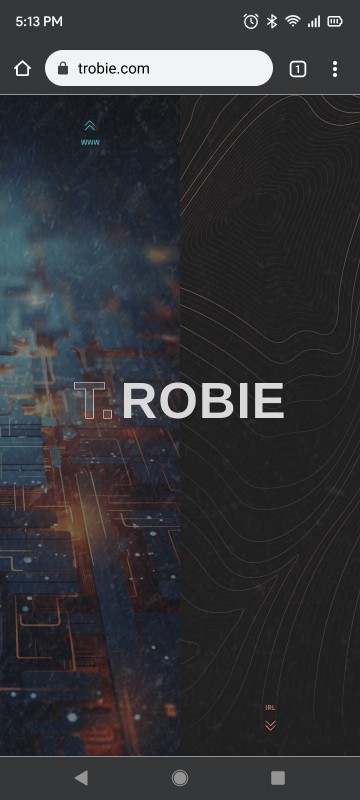
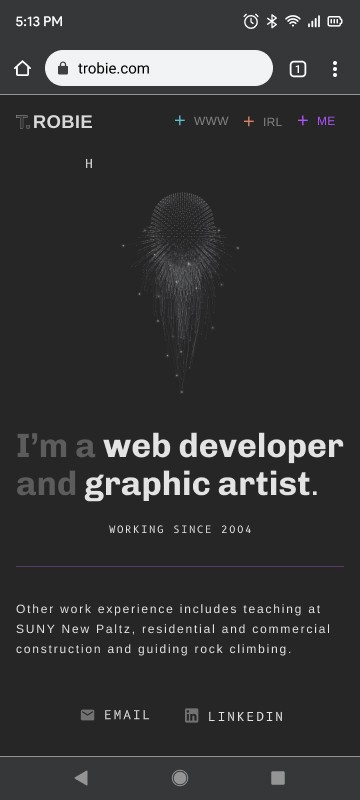
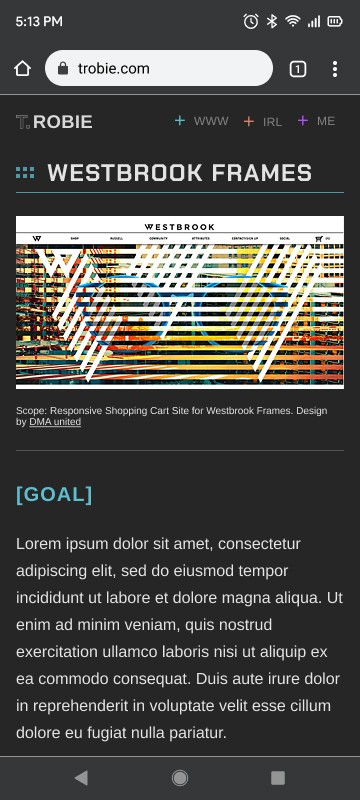
The final proposal consolidated all of the improvements Travis had requested throughout the design process, including the refined layout, the two-section screen split, and the preferred project card style, resulting in a cohesive and fully aligned design solution.
Mobile Version
03
Final Design
OUTCOMES & LEARNINGS
Through multiple iterations and collaborative feedback sessions, the project achieved a refined balance between functionality and aesthetics. The process highlighted the importance of client communication, structured review cycles, and the creative value of merging different design approaches into a single cohesive vision.
FINAL VERSION
The final version combined the strongest elements from both design directions. The result is a cohesive, dark-themed portfolio that clearly differentiates Travis’s work as a developer and graphic artist while maintaining a unified visual language.
NEXT
NEXT
PROJECT
PROJECT
Collaboration with Travis Robie to design his personal portfolio, focusing on clarity, balance, and effective presentation of his work.
Background
Travis wanted a portfolio website that reflected his dual identity as a web developer and graphic artist. His vision was a sleek, minimalistic design with a dark, technological aesthetic — clean lines, no personal photos, and a clear visual separation between his two branches.
PROCESS
Travis’ ideas were in the very first stage and we had to make our own interpretation of his concept. We were two designers working in parallel, and through several rounds of feedback and revision, we refined and aligned our approaches to match Travis’ ideas and personality.
OUTCOME
The final portfolio combined the best of both design directions, blending structure and creativity into a unified dark-themed interface that clearly differentiates his developer and artist sides while maintaining a cohesive, professional look.
01
Research
exploration
The project began with an exploration of developer and designer portfolios to gather inspiration and identify effective ways to present dual disciplines. The goal was to find a balance between showcasing Travis’s technical expertise as a developer and his creative expression as a graphic artist. A moodboard was created to define the visual direction, focusing on dark minimalist aesthetics, fine lines, and a modern, tech-inspired look.
02
Design
Two designers worked in parallel, each creating distinct visual directions. Initial sketches and layouts were reviewed with Travis, leading to valuable feedback on structure, tone, and balance. After each meeting, revisions refined the hierarchy, consistency and transition between screens.
FIRST VERSION
The first version used floating elements and hover-triggered color reveals, adding motion and interactivity to the layout.
After the first review, Travis requested a clearer distinction between his development and graphic design work and encouraged further exploration of visual directions.
second VERSION
The second design exploration integrated these updates, aligning the concept more closely with Travis’s vision. Since Travis preferred not to include personal images, a graphic element was used to serve as a subtle representation of his presence throughout the design.
PROJECT CARDS EXPLORATION
After the second review, Travis requested that the screen be split into two sections instead of three, leading to a subsequent iteration to implement this layout change.
He also expressed interest in one of the card sets, which informed the design direction for the projects section moving forward.
FINAL PROPOSAL
The final proposal consolidated all of the improvements Travis had requested throughout the design process, including the refined layout, the two-section screen split, and the preferred project card style, resulting in a cohesive and fully aligned design solution.
Mobile Version
03
Final Design
OUTCOMES & LEARNINGS
Through multiple iterations and collaborative feedback sessions, the project achieved a refined balance between functionality and aesthetics. The process highlighted the importance of client communication, structured review cycles, and the creative value of merging different design approaches into a single cohesive vision.
FINAL VERSION
The final version combined the strongest elements from both design directions. The result is a cohesive, dark-themed portfolio that clearly differentiates Travis’s work as a developer and graphic artist while maintaining a unified visual language.
NEXT
PROJECT
Collaboration with Travis Robie to design his personal portfolio, focusing on clarity, balance, and effective presentation of his work.
Background
Travis wanted a portfolio website that reflected his dual identity as a web developer and graphic artist. His vision was a sleek, minimalistic design with a dark, technological aesthetic — clean lines, no personal photos, and a clear visual separation between his two branches.
PROCESS
Travis’ ideas were in the very first stage and we had to make our own interpretation of his concept. We were two designers working in parallel, and through several rounds of feedback and revision, we refined and aligned our approaches to match Travis’ ideas and personality.
OUTCOME
The final portfolio combined the best of both design directions, blending structure and creativity into a unified dark-themed interface that clearly differentiates his developer and artist sides while maintaining a cohesive, professional look.
01
Research
exploration
The project began with an exploration of developer and designer portfolios to gather inspiration and identify effective ways to present dual disciplines. The goal was to find a balance between showcasing Travis’s technical expertise as a developer and his creative expression as a graphic artist. A moodboard was created to define the visual direction, focusing on dark minimalist aesthetics, fine lines, and a modern, tech-inspired look.
02
Design
Two designers worked in parallel, each creating distinct visual directions. Initial sketches and layouts were reviewed with Travis, leading to valuable feedback on structure, tone, and balance. After each meeting, revisions refined the hierarchy, consistency and transition between screens.
FIRST VERSION
The first version used floating elements and hover-triggered color reveals, adding motion and interactivity to the layout.
After the first review, Travis requested a clearer distinction between his development and graphic design work and encouraged further exploration of visual directions.
second VERSION
The second design exploration integrated these updates, aligning the concept more closely with Travis’s vision. Since Travis preferred not to include personal images, a graphic element was used to serve as a subtle representation of his presence throughout the design.
PROJECT CARDS EXPLORATION
After the second review, Travis requested that the screen be split into two sections instead of three, leading to a subsequent iteration to implement this layout change.
He also expressed interest in one of the card sets, which informed the design direction for the projects section moving forward.
FINAL PROPOSAL
The final proposal consolidated all of the improvements Travis had requested throughout the design process, including the refined layout, the two-section screen split, and the preferred project card style, resulting in a cohesive and fully aligned design solution.
Mobile Version
03
Final Design
OUTCOMES & LEARNINGS
Through multiple iterations and collaborative feedback sessions, the project achieved a refined balance between functionality and aesthetics. The process highlighted the importance of client communication, structured review cycles, and the creative value of merging different design approaches into a single cohesive vision.
FINAL VERSION
The final version combined the strongest elements from both design directions. The result is a cohesive, dark-themed portfolio that clearly differentiates Travis’s work as a developer and graphic artist while maintaining a unified visual language.
NEXT
PROJECT