
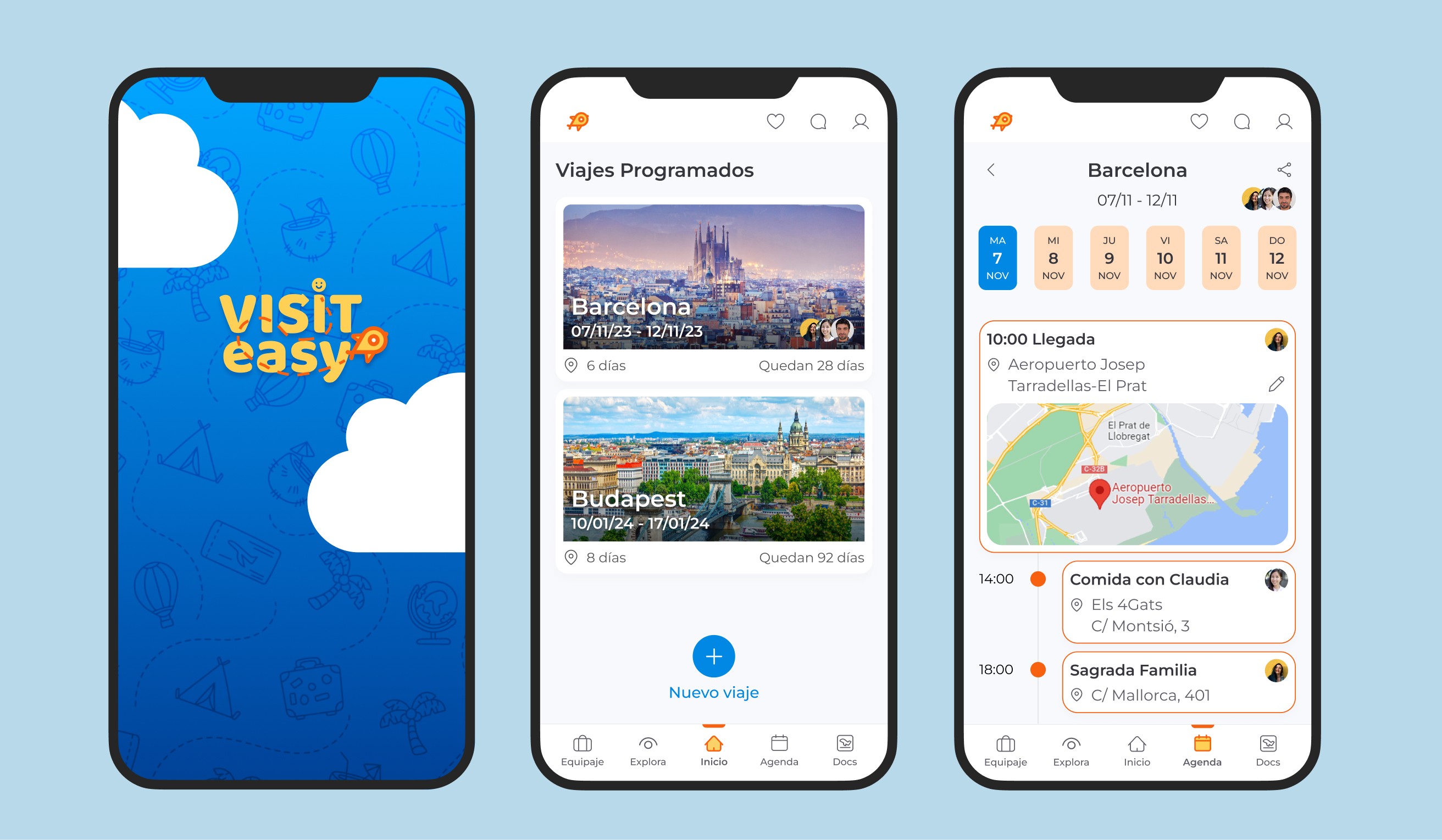
Visiteasy is a trip organizing app that helps travelers to organize their trip details and coordinate the details with their friends.
Background
Visiteasy began as my Master’s final project. The idea came from my own frustration while planning a trip - jumping between apps, websites, and notes just to keep everything organized. It felt chaotic and time-consuming, and I relized many travelers probably faced the same problem. That’s when I decided to design a simpler, smarter way to plan trips.
Problem
Planning a trip often means juggling multiple tools — booking apps, maps, lists, and shared docs — making it easy to lose track of details or repeat work. Coordination gets even trickier when traveling with others. The result? Confusion, wasted time, and unnecessary stress.
goal
Visiteasy was designed to make trip planning easy and enjoyable. The goal was to create one app where travelers can organize every detail, collaborate effortlessly, and find everything they need in one place — saving time and reducing stress before and during their journey.
Research
Competitive ANALYSIS
The research began with a competitive analysis of travel apps to identify market gaps and opportunities.
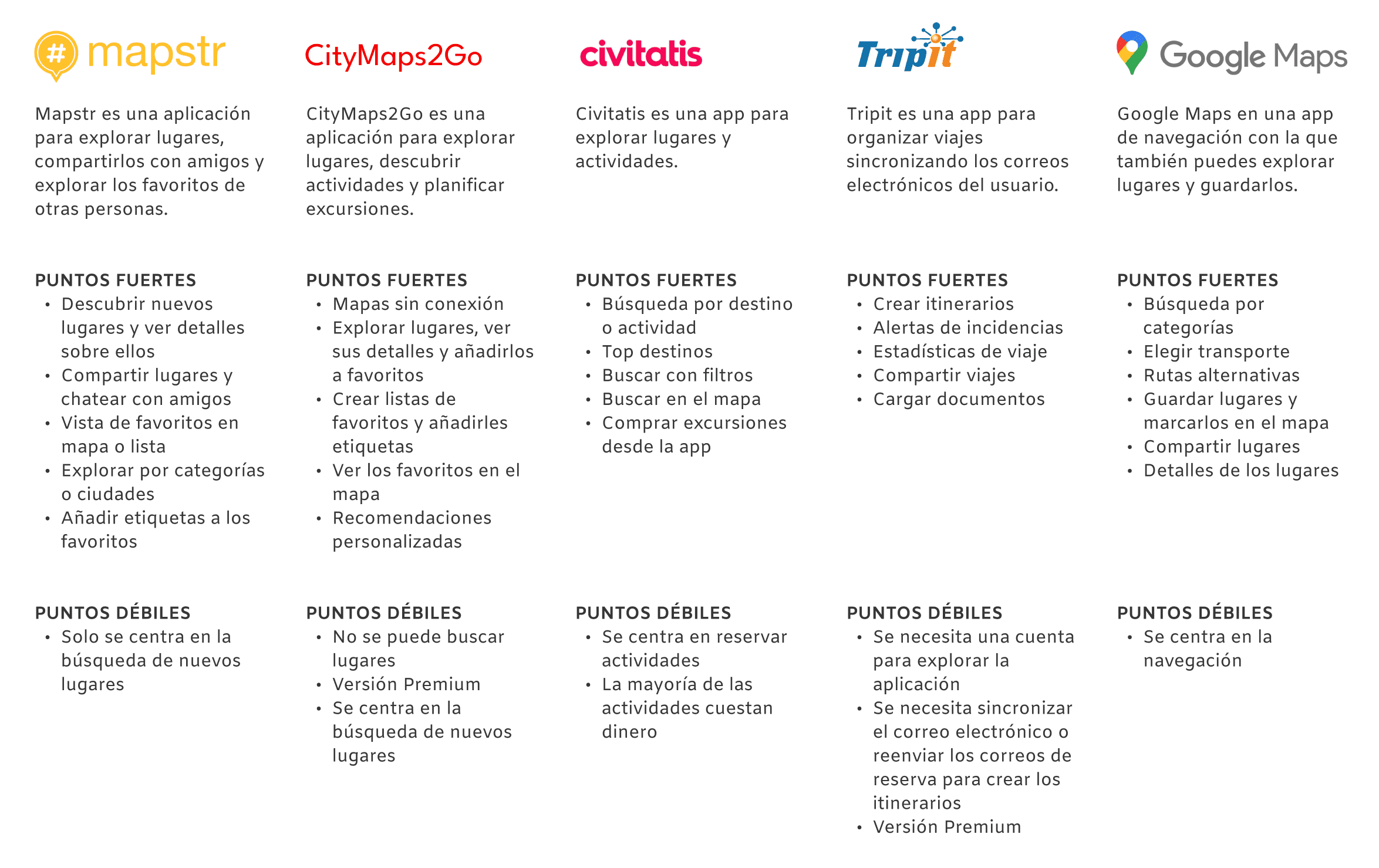
Among the competitors, TripIt was the most closely aligned with the concept behind Visiteasy, yet it presented some limitations — such as requiring email synchronization and offering limited flexibility for users to add or customize their own places.
To gain deeper insights into user behaviors and planning habits, this analysis was followed by user surveys aimed at understanding how travelers organize and manage their trips.
SURVEYS
A survey of 70 participants revealed several key insights into how travelers plan and manage their trips:
key insights
Most users prefer to organize their own trips rather than rely on travel agencies. They typically travel with partners, friends, or family.
Users value having all details — such as accommodation, schedules, and budgets — in one place to save time and travel with peace of mind.
Most begin planning at least a month in advance, using apps like Google Maps, Booking.com, and TripAdvisor.
Participants expressed a clear demand for a single platform that consolidates trip planning, enables collaboration, and offers agendas, checklists, and personalized suggestions.
INTERVIEWS
Five semi-structured interviews were conducted with participants aged 25 to 60, all of whom travel at least once a year. The goal was to understand their habits, motivations, and frustrations when planning trips.
key insights
Many participants were unaware of existing travel apps but expressed strong interest in using them once introduced.
Organizing trips with others often caused frustration, as one person typically took on all the planning responsibilities.
Short trips required more detailed planning to maximize time, while longer trips allowed for greater flexibility.
Across all profiles, travelers prioritized feeling secure and having key information—such as accommodation, essentials, and must-see spots—clearly organized.
These findings highlighted a clear opportunity to design a tool that reduces planning stress and enhances the overall travel experience. Users are looking for an all-in-one solution that brings together organization, personalization, and flexibility, reducing the stress and fragmentation often associated with planning group trips.
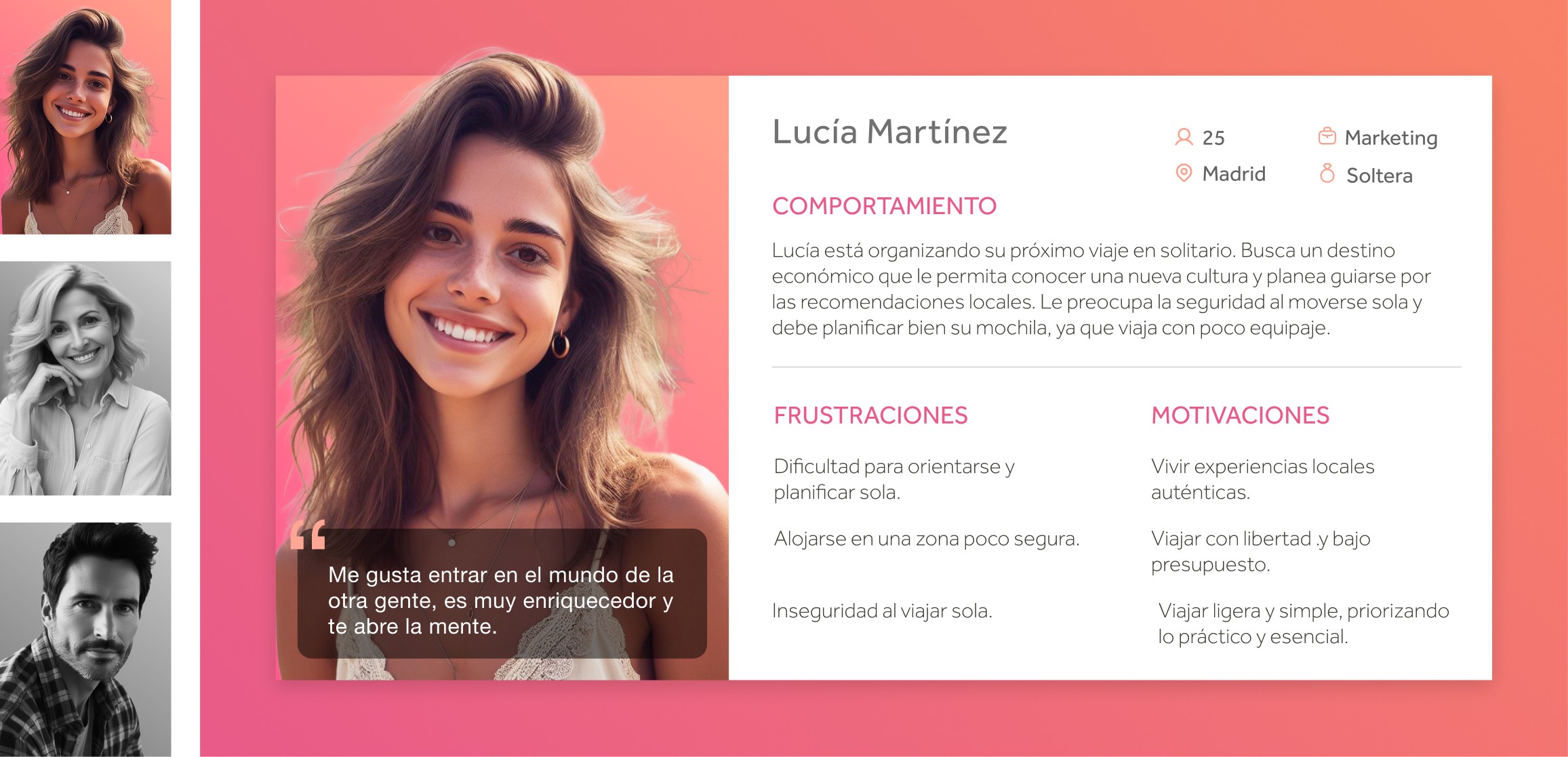
USER PERSONA
Based on insights from the interviews, three distinct traveler types were identified, each defined by their habits, motivations, and travel behaviors.
PROCESS FLOWCHART
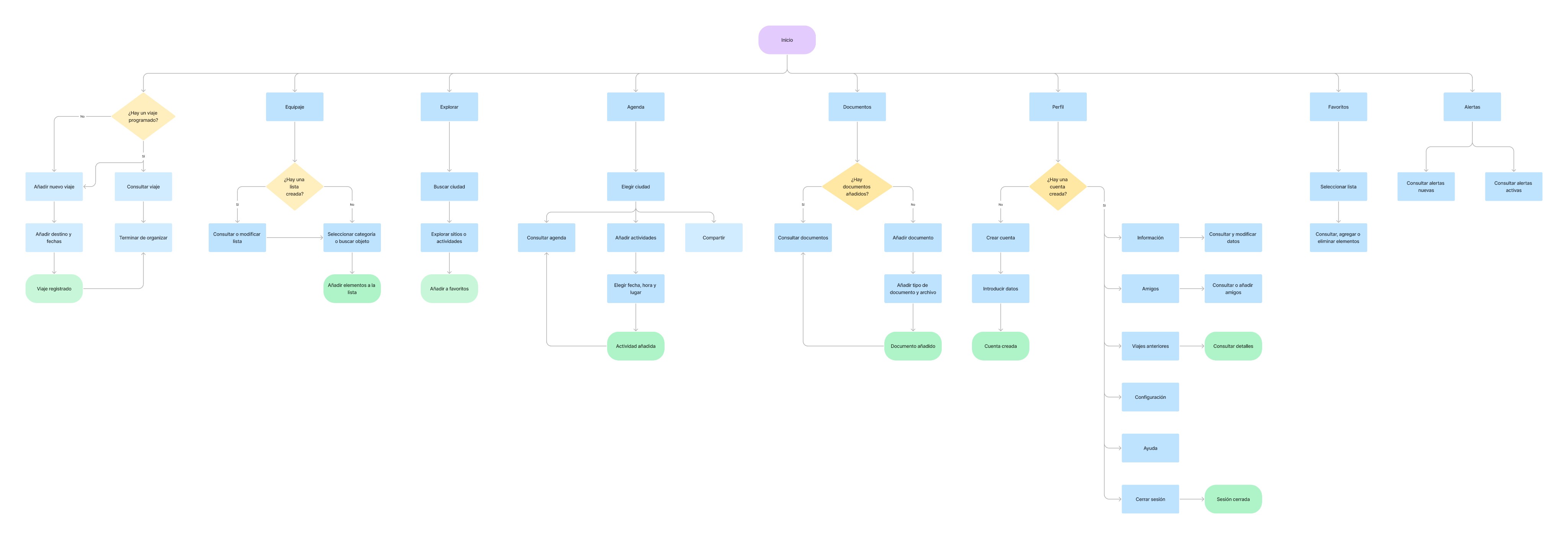
A process flowchart was created to map the key steps involved in planning a trip with Visiteasy.
This diagram helped clarify the core functionalities, and ensure a logical, intuitive flowthroughout the app.
First version
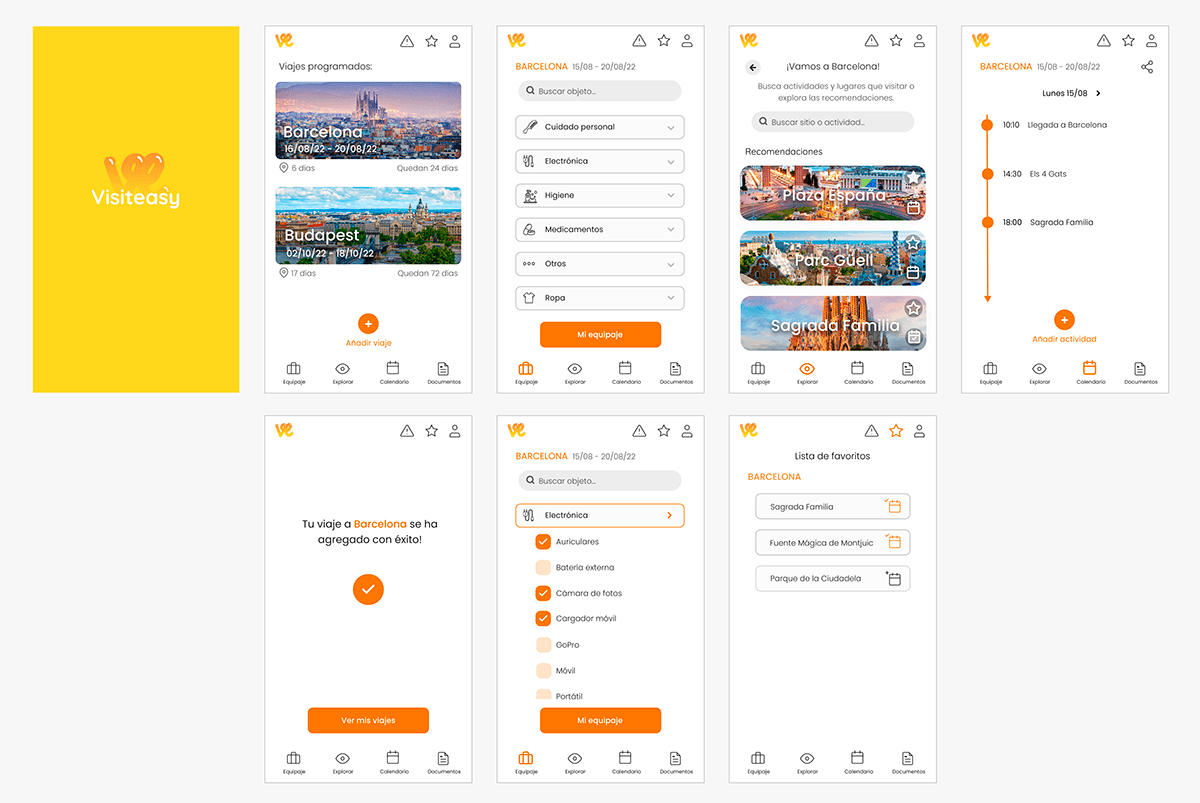
Following the process flow, a high-fidelity prototype was developed to visualize the app’s main screens, interactions, and visual identity.
This version was used to test usability, gather user feedback, and refine the overall experience and design consistency.
USABILITY TESTING
Once the high-fidelity prototype was ready, usability testing was conducted with five participants, who completed key tasks while thinking aloud to provide real-time feedback.
Tasks Tested
Evaluate the process of creating a trip from scratch.
Select items from different categories and verify them in the checklist.
Browse places to visit and add to favorites.
Access the calendar and add a new activity.
UX Improvements
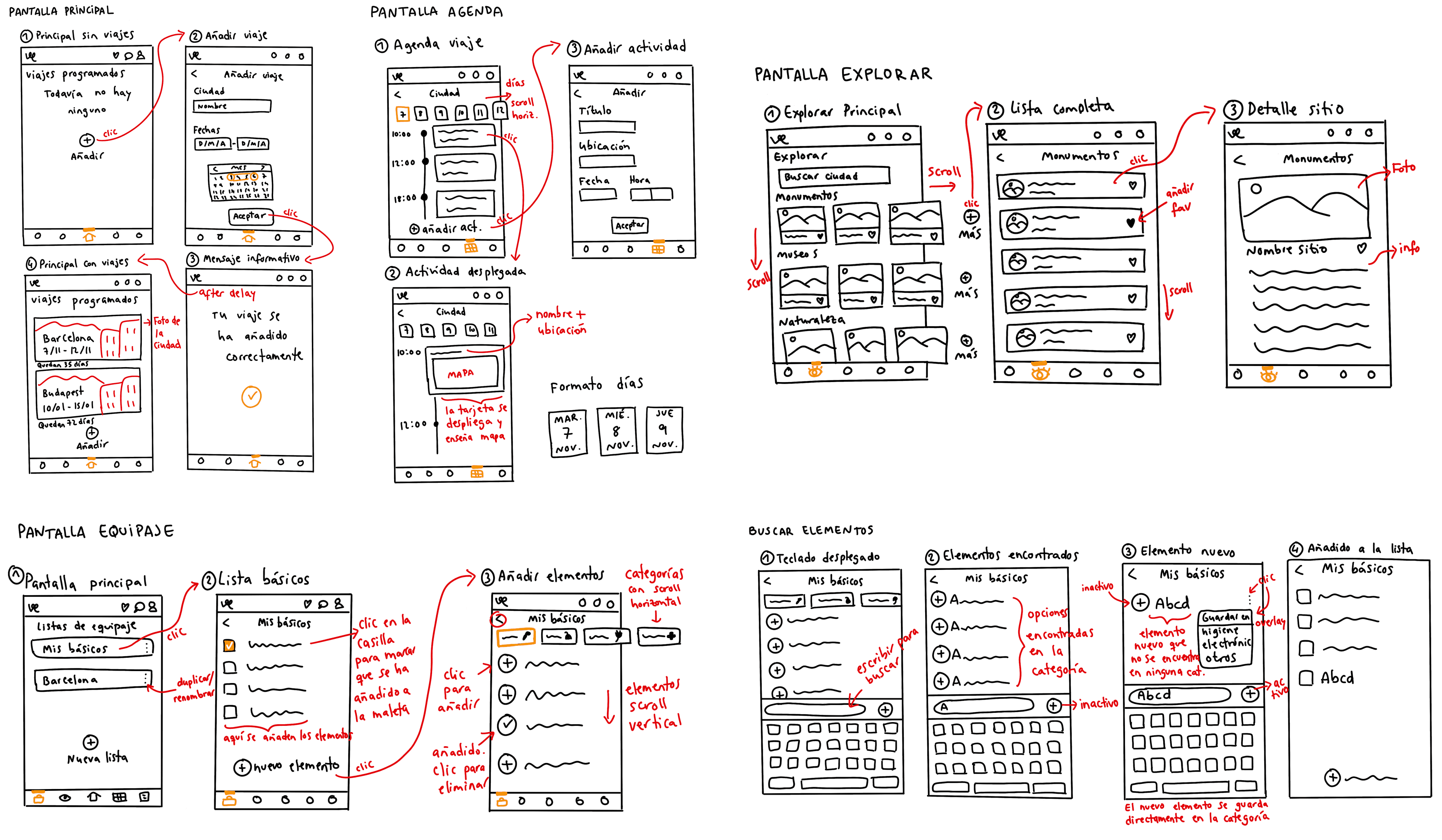
Following the user testing insights, sketches were developed to explore improvements to the screens and interactions. These sketches informed the creation of an updated high-fidelity prototype, incorporating refinements to navigation and usability.
FINAL VERSION
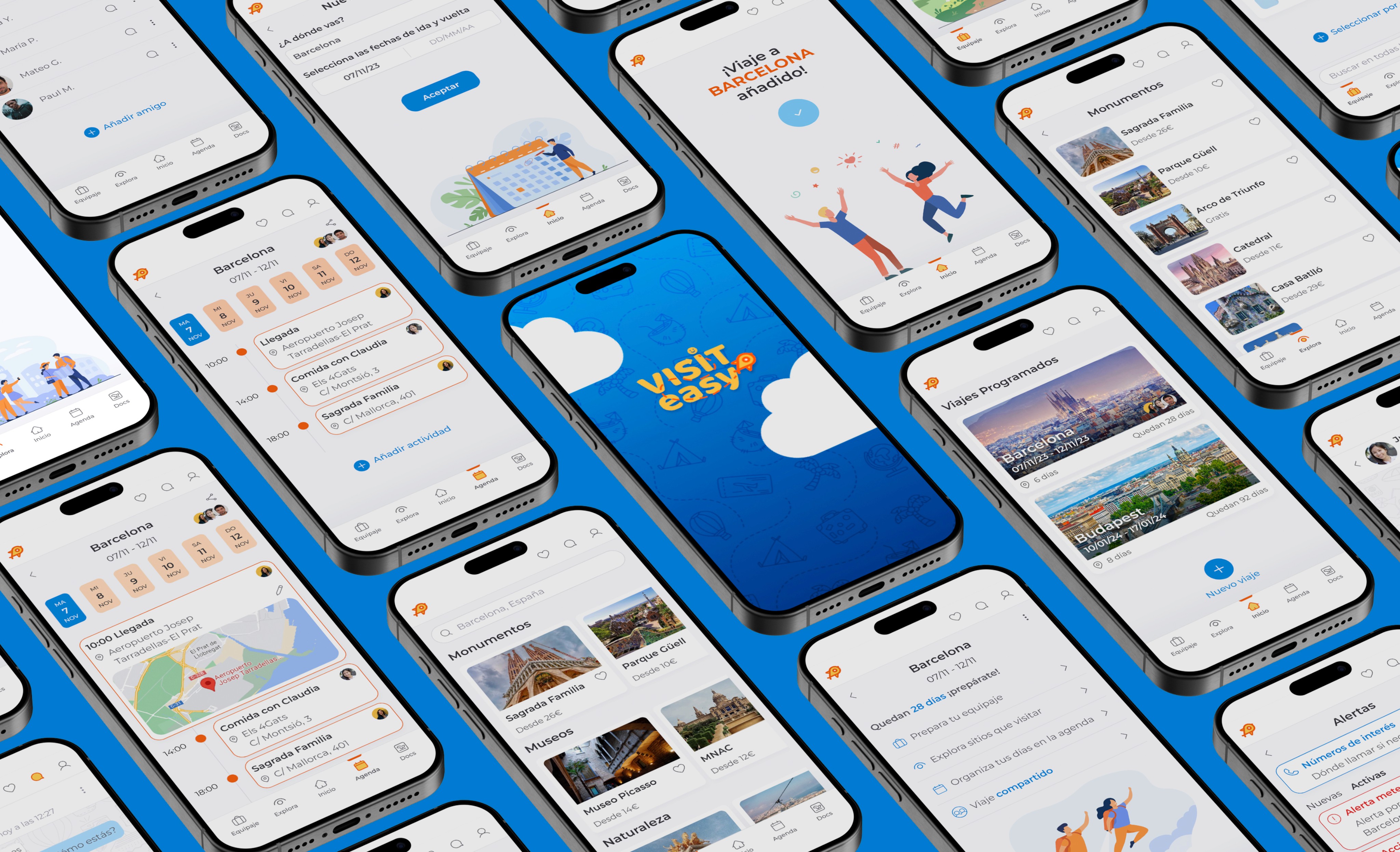
Try the prototype in Figma.
Outcome & Learnings
The iterative design process resulted in a high-fidelity prototype that consolidates trip planning, supports collaboration, and adapts to different travel styles.
Key Outcomes
A streamlined user flow that reduces complexity for both individual and group planning.
Enhanced usability and clarity based on real user feedback.
Features tailored to user needs, including packing lists, calendars, favorites, and personalized suggestions.
Key Learnings
Early user research and testing are crucial to uncover pain points and validate assumptions.
Even minor adjustments to flows and visual hierarchy can significantly improve usability.
Understanding different traveler types allows for flexible and inclusive design solutions.
This project highlights the value of a user-centered, iterative approach, balancing functional requirements with a seamless, enjoyable user experience.